Happy Monday!
We’re back from London Climate Action Week, and we’ve got a temperature check for you on the state of climate and energy tech in Europe. Read on for what’s hot and what’s not.
In deals, $39m for a carbon removal registry and verification platform in London; $30m for a compact fusion device developer in Bristol; and $25m for a sustainable space transportation developer in Christchurch.
In other news, DOE loan commitments for a new nuclear fleet, a FERC order for large loads, and a new nuclear IPO.
Thanks for reading!
Not a subscriber yet?
📩 Submit deals and announcements for the newsletter at [email protected].
💼 Find or share roles on our job board here.
CTVC is powered by Currence, market intelligence to power the AI era.

Last year, it felt like LCAW found its stride, as people poured into London from all over the world, hopeful that Europe may be a beacon for climate and competitiveness.
This year, despite the 95-degree heat wave (35 Celsius, for the locals), the UK and Europe’s climate leadership felt decidedly lukewarm. Private and public leaders alike wrestled with how to balance the region’s climate ambitions against the need to rebuild a competitive industrial and defense engine. The irony of hosting Climate Week during a heat wave wasn’t lost on anyone (an LSE event on adapting to extreme heat got canceled…because of extreme heat). 🥵
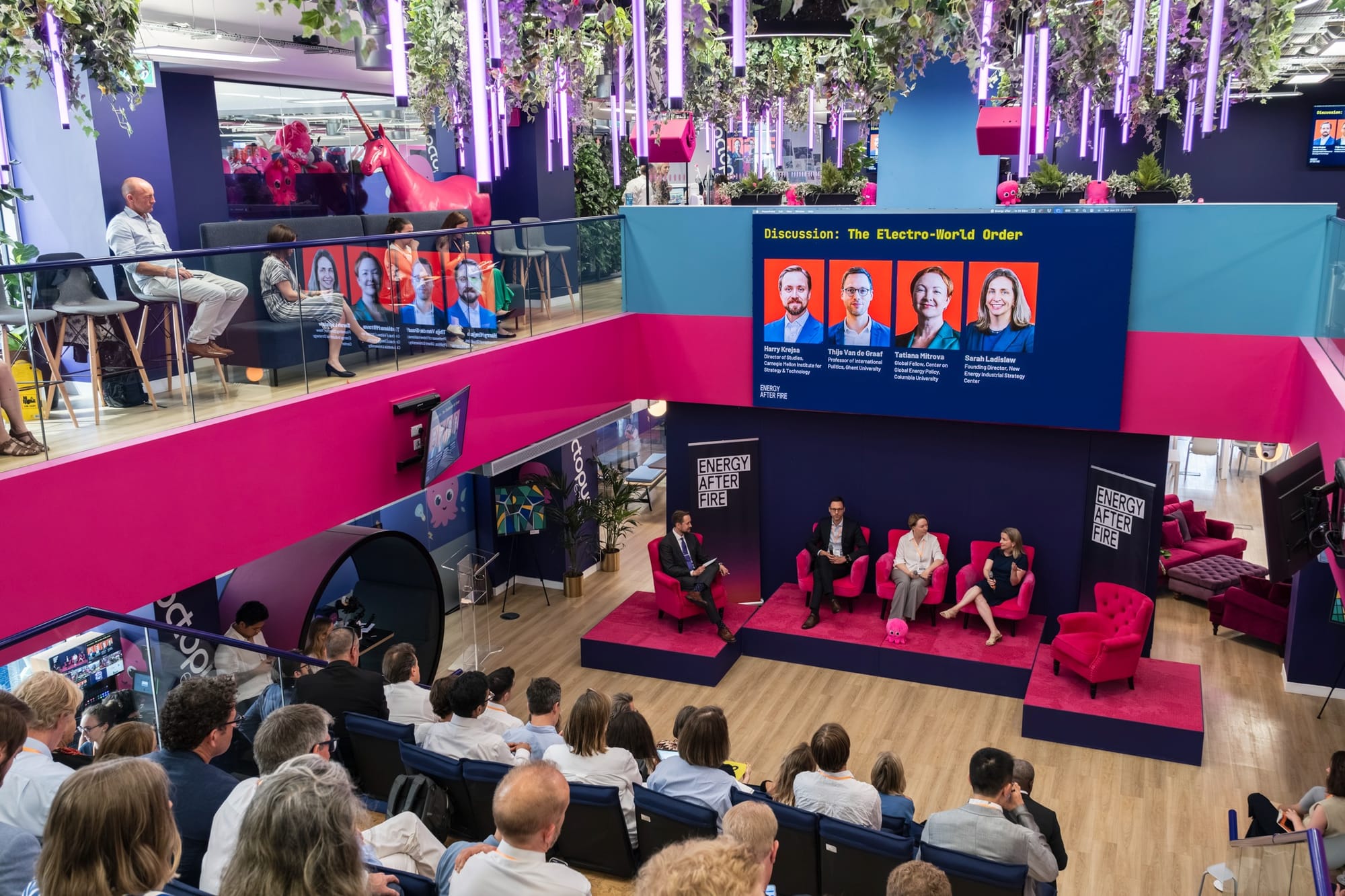
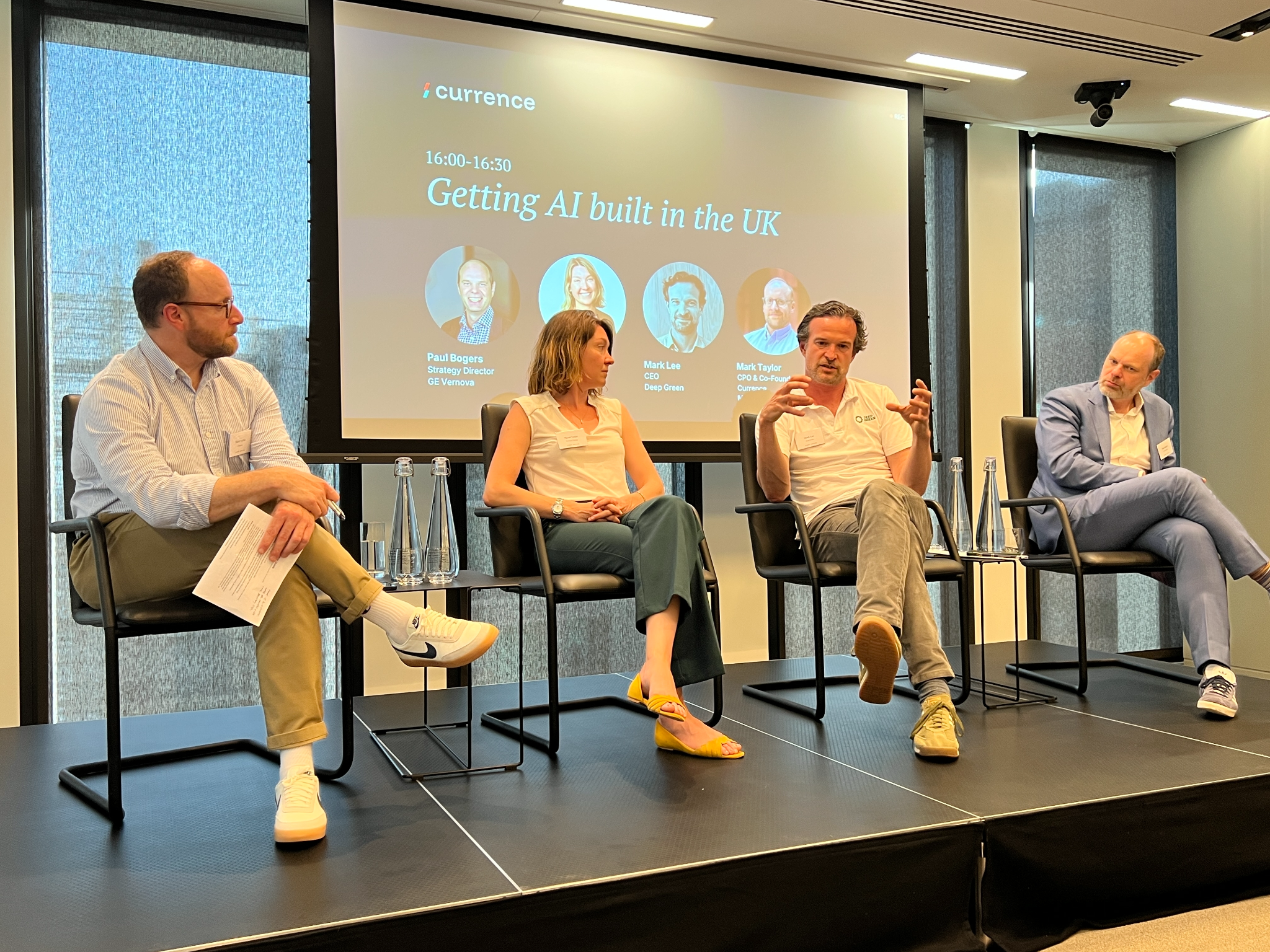
Now let’s be honest, the most useful part of Climate Week is less the announcements and speeches on stage, but rather what gets said behind closed doors. We braved the heat and canvassed the town to get the behind-the-scenes, from our own event on Building AI in the UK, to Energy After Fire, our co-hosted event with HSBC on corporate offtake, the Waddesdon Summit, the Sustainable Ventures x EU Commission roundtable on Europe's competitive edge, Concave Summit on natural solutions, the UCL Capital Stack Summit, and more. Here’s the temperature check:
🔥 Hot
The Electrotech architect for sovereignty
Sovereignty got as much airtime as sustainability. John Kerry reframed the transition through the lens of "speed, sovereignty, sustainability" (in that order). The EU Commission roundtable spent as much time on supply chain security and China dependency as it did on carbon targets. Meanwhile, data centers kept surfacing as an opportunity to drive both sovereignty and industrial demand.
Electrotech as defense tech also landed harder than it might have a year ago. Cheap batteries, modular solar, AI control systems are both a decarbonization stack and a defense stack, bolstering the case for a climate and national security angle.
But, as one speaker put it, Europe is neither a petrostate nor an electrostate. It has no oil reserves and can’t match China's manufacturing scale. Its play is to be the "system architect" - building the integration layer, the software, the standards - rather than trying to replicate Chinese panel manufacturing domestically. That's a role Europe might actually be able to win.
Flexibility is good for the grid and consumers
Octopus, the largest energy supplier in the UK, had its tentacles all over LCAW, starting with its Energy Tech Summit with more than 4,000 of its customers in attendance. Greg Jackson, the CEO of Octopus, has managed to make energy a consumer experience, likening automated flexible tariffs to getting a discount at the supermarket. Under its managed EV charging tariff, Octopus makes 98% of charging decisions by algorithm where customers set preferences once, plug in, and let the system optimize. Additionally, it launched new plug-in, self-install, home batteries, big and small, essentially creating permissionless DERs.
From consumer to grid, flexible connections also took the spotlight. As Andy Hackett put it, flexibility can reduce the distribution network by about 25% in Great Britain. Across the US and the UK, grid regulators are prepared to offer speedier connections for those who are willing to be flexible. Grids are underutilized today, and simply increasing utilization can reduce energy bills.
Demand is the missing piece
Data centers could help bring much-needed demand into the UK and drive down power prices. UK power prices have climbed in the last decade as more costs got loaded while industrial growth fell.
Data centers are large sources of demand and could become an affordability lever if they can help grow the demand base and spread costs spread across a larger denominator. Connecting roughly 10GW of data centers could take around £20 off the transmission portion of a residential bill (about 20%) and save large industrial customers millions.
But the catch is that the UK is well behind. The US has around 16GW of announced data center capacity for 2026 versus Europe's roughly 2GW. Despite the gap, there’s an opportunity for UK to learn from the US on what's coming and what to avoid (e.g. community backlash).
🌡️ Lukewarm
European competitiveness between a rock and a hard place
There was widespread consensus across rooms that the UK and Europe have severely fallen behind on competitiveness and growth, especially against the backdrop of the UK about to name its sixth prime minister in seven years. The debate was around just how far behind the UK was from the US - months or years?
But UK and European policymakers are stuck between two (sometimes) competing interests - prioritizing its climate ambition or industrial growth, especially in new booming markets like AI. The challenges on the energy supply side echo those of the US (slow permitting, community backlash, supply chain dependency), but paired with flat to declining demand. And despite all the working groups and roundtables’ ambition to overcome the challenges, it felt like more talking vs doing.
The UK grid, watch this space
Let’s call this one “room temp” moving to “hot.” UK grid regulator Ofgem (think of it like FERC) has been busy the last few years solving the supply and demand challenges mentioned above. The UK is attempting to create a competitive market for grid access, actively vying for data centers to utilize the grid, get willing-to-pay-high customers in the base, and compete on AI.
First, Ofgem moved to a "first ready, first served" vs “first come, first served” connection model in April 2025 to clean up the speculative projects in the queue. Now they're honing in on speculative demand. The demand queue has jumped past 125GW, yet only ~4.5GW actually wants to connect by 2030. Similar to FERC’s recent show cause orders, the approach is to enable large loads to come online by pricing out speculative projects, incentivizing flexible connection, providing ratepayer protection, and even allowing for developers to build their own last-mile connection through new licenses for Independent Transmission Operators.

Blended finance: still the answer, still the question
The capital formation conversation has been nothing if not consistent – we need patient capital, cities as partners, green loans over grants. As someone put it, "Don't just give us a grant. Show us the capital pathway." But a silver bullet mechanism for solving the climate capital gap remained as unresolved at LCAW 2026 as it was at LCAW 2023.
On the upside, the UK and Europe are turning to their own coffers to provide the long-term growth capital needed to retain high-flying companies in the region, from the British Business Bank connecting pension funds to UK-based GPs to the new €5 Billion Scaleup Europe Fund.
❄️ Cool
VC for natural solutions
The consensus in the room was that venture capital is the wrong structure for natural solutions in forestry, biodiversity, and oceans. Return profile, time horizon, asset class characteristics: none align with a traditional VC fund. The conversation has moved to what the right structure is, not how to make VC work. Still, there was excitement around BBNJ ("the Paris Accord for the ocean"), helping bring about greater conservation efforts and demonstrate the value of natural solutions at large.
Energy “transition”
Energy under the pure climate framing or the fossil framing were both declared dead ends. Kingsmill Bond argued neither the fossil perspective nor the climate perspective can explain the technology shift or deliver a world where 10 billion people thrive with plenty of energy. Attendees were pro dropping the "energy transition" language itself because it sounds too slow and polite.
Asia caring what the West does
Assaad Razzouk had one of the bluntest takes of the week – that nobody in Asia is thinking about what the British, French, or even Americans do, and nobody cares.
⚡ Astral Systems, a Bristol, England-based compact fusion device developer, raised $30m in Series A funding from Blast Club, Daphni, Mercia Ventures, Playfair VC, Speedinvest, and Tees River.
🏭 Dawn Aerospace, a Christchurch, New Zealand-based sustainable space transportation developer focused on reusable spaceplanes and in-space propulsion systems, raised $25m in Series B funding from Aera VC, Alpha Funds, ANA Holdings, Balerion Space, Crosscut Ventures, and other investors.
🚚 Superlight, a Yateley, England-based lightweight electric middle-mile truck developer raised $21m in Series A funding from 2150 and Engine Ventures.
🏠 Aston Power, a Raleigh, NC-based private power infrastructure developer, raised $20m in Series A funding from Building Ventures, JLL Spark, and TDK Ventures.
🏠 VARM, a Berlin, Germany-based building insulation and retrofit platform, raised $20m in Series A funding from ABN AMRO, Aurum Impact, Emerge Capital, GET Fund, noa, and Pale Blue Dot.
⚒️ Cuprum Metals, a Boulder City, NV-based developer of low-emission copper leaching technology, raised $19m in Series A funding from BHP Ventures, Lundin Family Office, and Woodline Partners.
⚡ AlpSemi, a Grenoble, France-based semiconductor components developer for power systems, raised $19m in Seed funding from Yotta Capital Partners Cycle Group, Navitas Semiconductor, and SE Ventures.
⚡ Captura, a Pasadena, CA-based direct ocean carbon capture developer, raised $13m in Series B funding from Equinor Ventures, Aramco Ventures, EDP Ventures, Eni Next, Freeflow Ventures, and others.
🛵 Metro Africa Xpress (MAX), a Lagos, Nigeria-based electric micromobility vehicles developer, raised $6m in Series A funding from Alitheia Capital, Breakthrough Energy Ventures, Novastar Ventures, and Yamaha Motor Ventures.
⚡ Mantle Energy, a Dallas, TX-based enhanced oil recovery and geothermal energy developer, raised $5m in Seed funding from 17Shoals.
🛰 H3 Zoom, a Singapore-based AI-powered infrastructure inspection and asset intelligence platform, raised $4m in Series A funding from AngelCentral, JRE Ventures, Lotus Singapore, M7 Holdings, Moringa Ventures, and SGInnovate.
🌾 Terraxy, a Thuwal, Saudi Arabia-based soil regeneration technology developer for desert environments, raised $3m in Seed funding from KAUST Innovation Ventures and Wa'ed Ventures.
⚡ Enlight Renewable Energy, a Tel Aviv, Israel-based renewable energy developer, raised $1.3bn in PF Debt funding from BNP Paribas, Crédit Agricole CIB, MUFG Bank, Natixis, and other investors.
♻️ Hybar, an Osceola, AR-based scrap metal recycling and steel rebar manufacturer, raised $1.1bn in PF Debt funding from undisclosed investors.
⚡ Origis Energy, a Miami, FL-based renewable energy project developer, raised $900m in Debt funding from EIG Global Energy Partners, Celtic Bank, and TD Bank.
⚡ Matrix Renewables, a Madrid, Spain-based renewable energy platform, raised $1.3bn in debt and equity financing, including $970m in PF Debt from HSBC, MUFG Bank, Nomura, and Santander.
🔋 Spearmint Energy, a Miami, FL-based battery energy storage developer and operator, raised $325m in Debt funding from Aiga Capital Partners, Elda River Capital Management, Harrison Street Asset Management, and Nuveen Energy Infrastructure Credit.
🚗 Zenobe Energy, a London, England-based battery solutions designer, financier, and operator, raised $277m in Debt funding from Credit Agricole CIB, MUFG Bank, Siemens Bank, Sumitomo Mitsui Banking Corp, and Societe Generale.
⚡ TeraWatt Infrastructure, a San Francisco, CA-based EV charging provider for medium and heavy-duty fleets, raised $150m in Debt funding fromRBC Capital, SMBC and UBS.
☀️ Solar Landscape, an Asbury Park, NJ-based community solar developer, raised $125m in Debt funding from M&T Bank, Atlantic Union Bank and Flagstar Bank.
⚡ Landgate, a Denver, CO-based land and grid intelligence platform, was acquired by Wood Mackenzie for an undisclosed amount.
🌱 Cedar, an Abajas, AI-powered sustainability workflow automation platform, was acquired by BeZero Carbon for an undisclosed amount.
🥩 Bobeldijk, a Devente, Netherlands-based plant-based food manufacturer, was acquired by Schouten Food for an undisclosed amount.
🌍 Pachamama Ventures, a San Francisco, CA-based venture capital firm focused on decarbonizing industry, energy, and freight, closed $5m for its debut Fund I.
🌱 100x100, a Singapore-based climate venture builder, launched $100m target Fund II to co-found up to 50 climate companies across agriculture, energy, industry, materials, and buildings in Southeast Asia and India.
This is a sample of deals available for Currence clients. Can’t get enough deals?
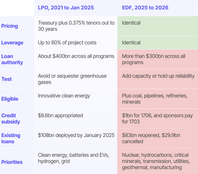
☢️ DOE announced loan commitments to support the American nuclear supply chain, including up to $1.75bn per AP1000 reactor. [Link]
$1.75bn per reactor across 10 AP1000s is roughly 20% of each project's total cost, and it's structured to de-risk the long-lead items (pressure vessels, turbines) that stall large nuclear. Westinghouse and each utility partner still have to put $1bn of equity per project upfront, but front-loading the supply chain could be the unlocker that gets new fleets built.
⚡Tesla, Sunrun, and RenewHome announced a joint VPP combining batteries, smart thermostats, and rooftop solar across already-deployed assets. [Link]
Individual DERs can struggle to offer the kind of capacity utilities or hyperscalers want. However, stacking batteries + thermostats + solar across millions of homes starts to look like a portfolio with predictable, dispatchable behavior, helping to unlock long-term contracts for VPPs.
📉 Deep Fission's nuclear IPO raised just $40m of a $150m target, testing public market limits for nuclear. [Link]
Deep Fission first attempted to do a SPAC in September 2025, only to take the traditional IPO route, closing at $16/share, substantially down from its original $24-$26/share plan. This is another sign of the public markets barbell we wrote about, with investors rewarding those with commercial traction and seeing right through those without.
⚖️ FERC issued orders to all six RTOs/ISOs to reform large-load interconnection rules. The orders direct each regional grid operator to justify or reform tariffs for facilities over 20MW, with focus on study processes, cost transparency, and co-located generation rules. FERC explicitly declined to set a single national standard. [Link, Powerstack]
Show cause orders are a recommendation framework, not enforcement, so the real impact depends on how each ISO responds in the next 60 days. An explicit focus on co-located generation and "active transmission technologies" (ATT) is the bullish read for grid-enhancing tech. But the real thing we’re watching for is the 30-day adequacy report, which forces the RTOs to spell out the gap between queued load and deliverable generation on the record. Read more in Powerstack.
🔋Energy Dome signs the first bilateral commercial contract with Google for LDES, for a 23MW/200MWh CO2 battery in Ireland. [Link]
Google cuts out the middleman on long-duration storage. Earlier Energy Dome and Google deals flowed through utilities (Arizona via Salt River Project), whereas this is a direct agreement with Google as the 100% offtaker. If this model spreads, hyperscalers become the direct buyers rather than waiting on utilities as the intermediaries.
✈️ Honeywell and ExxonMobil's methanol-to-jet (MtJ) SAF pathway received ASTM approval, clearing a major regulatory hurdle for commercialization. [Link]
ASTM certification is the gating step that unlocks everything downstream. MtJ breaks SAF's dependence on scarce waste oils and fats by tapping e-methanol from captured CO₂ and green hydrogen and could fill the eSAF supply gap needed for ReFuelEU mandates.
📊 NOAA's climate data website is being scaled back, and a new independent site, climate.us, has launched to host the archive. [Link, Link]
💡Check out how our parent company Currence and Acario Innovation (Tokyo Gas’s CVC) work together to support projects that could shape the future of energy. [Link]
🐢 And finally: Jonathan the tortoise, the oldest known living land animal at 192, was reconfirmed by Guinness this month. [Link]
📅 Morning Pitch Asia @Indonesia – Climate Tech to Net Zero: Join this pitching platform spotlighting climate startups across clean energy, carbon management, sustainable mobility, circular economy, and climate data. Hosted by Deloitte over Zoom or in person July 15, 11pm ET / 10am WIB.
💡 Google for Startups Accelerator: AI for Energy: Apply for an equity-free, three-month program offering mentorship, Google Cloud access, and technical support for pre-seed to Series A startups using AI for grid modernization, demand flexibility, or energy efficiency. North America applications close June 30.
📅 Data Centers: The Race for Power: YPE NYC and Alumni Ventures panel on permitting, financing, and grid infrastructure under accelerating demand. On July 9, 6:30–8pm, in New York City.
Senior Manager / Director, Communications @Carbon Removal Canada
Finance & Ops AI Lead – Associate @Keyframe
Energy & Climate Policy Engagement Lead @Coreweave
📩 Feel free to send us deals, announcements, or anything else at [email protected]. Have a great week ahead!

 Newsletter